Starting SAT preparation at the right time can make the difference between a good score and a great one. Beginning too late forces students into high-pressure cramming sessions, while starting too early often leads to burnout before test day arrives. The key lies in finding that sweet spot where students have enough time to build skills systematically without losing momentum. Understanding how to ace the SAT starts with creating a preparation timeline that aligns with individual strengths, weaknesses, and target scores.
Stop wondering.
Start matching.


Finding the optimal moment to start SAT prep becomes challenging when students juggle schoolwork, extracurriculars, and college research. Rather than guessing how many months of preparation are needed or when to take that first practice test, students benefit from personalized guidance that accounts for their current academic standing and available study time. Strategic preparation requires understanding both the test format and individual learning patterns to create an effective study schedule. Students seeking this level of customized planning can work with Kollegio's AI college counselor to develop a preparation strategy tailored to their specific goals and timeline.
Summary
- Most students start SAT prep at the wrong time because they confuse duration with strategy, either beginning a year or more in advance without a plan and burning out before test day matters, or waiting until a few weeks remain and trying to cram everything at once. Both paths ignore how learning actually sticks and lead to wasted motion, whether that motion happens over twelve months or twelve days.
- The best time to start is three to six months before your first SAT. That window gives you enough runway to identify weaknesses, build skills deliberately, and leave space for a retake if needed. Anything shorter becomes a scramble, and anything longer risks losing focus before test day matters.
- Starting too early without structure leads to diluted effort over time, with students studying inconsistently, forgetting what they learned, and losing momentum. Research on the forgetting curve shows that information fades over time if it is not actively reinforced, especially when learning is spread out without proper review. At the same time, 75% of high schools start before 8:30 a.m., according to the Centers for Disease Control and Prevention, which compounds the challenge as students are already sleep-deprived, making it harder to sustain focused study over long timelines.
- Starting too late creates the opposite problem, where prep is compressed into a short window, and students rely on cramming. Research consistently shows that massed practice (cramming) is less effective for long-term retention than spaced, repeated learning, leading to limited score improvement, no time to address weak areas, no opportunity for a retake, and increased stress near test day.
- College Board's Official SAT Practice research shows that 20 hours of study is associated with a score gain of 115 points, and even 6 to 8 hours of study is associated with a 90-point score increase when that time is focused and deliberate. This data becomes actionable when you know exactly what those points unlock in terms of college options or scholarship eligibility, shifting how you approach timing from starting prep early without direction to starting with clarity.
- Kollegio's AI college counselor connects your SAT prep directly to your goals by showing what score you need for your target schools, helping you build a college list based on your current profile, and evaluating whether improving your score will meaningfully change your options.
Why Most Students Start SAT Prep at the Wrong Time
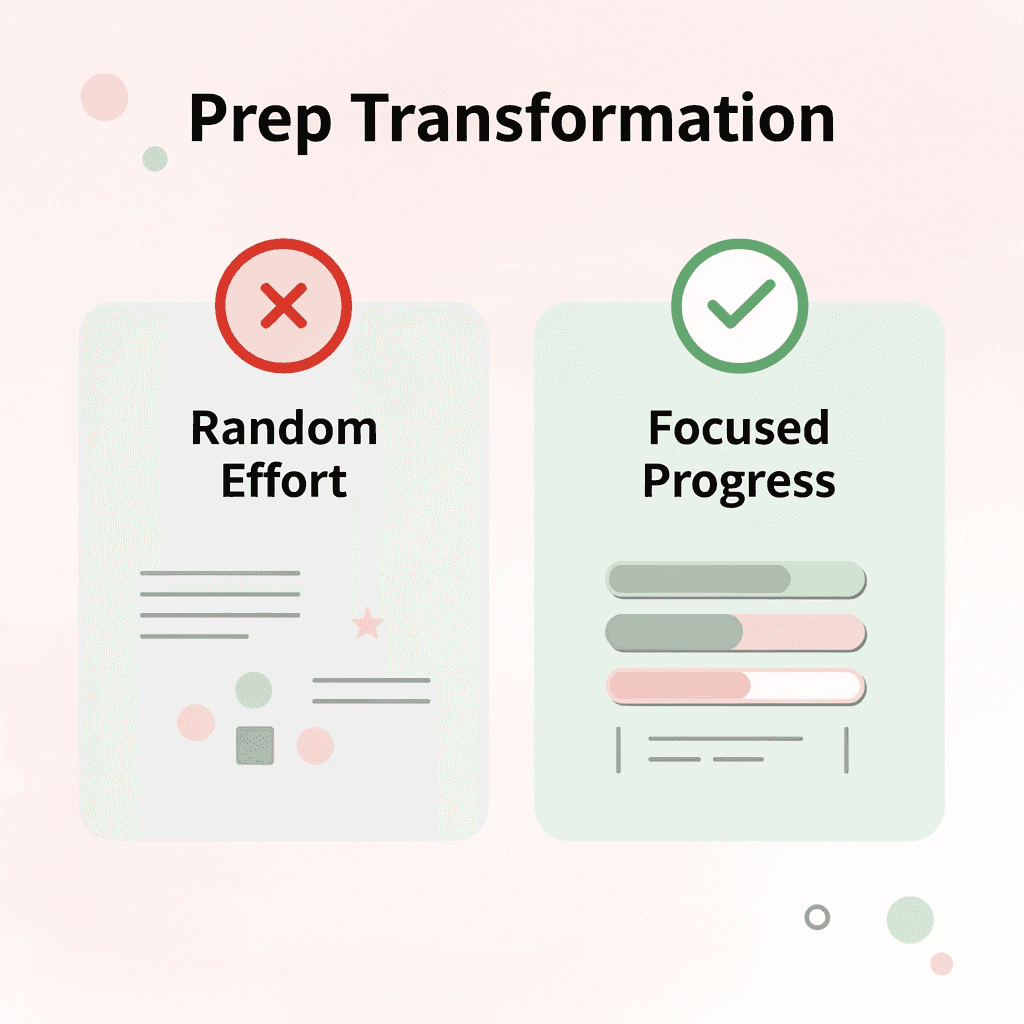
Most students start SAT prep at the wrong time because they confuse duration with strategy. They either begin a year early without a plan, growing fatigued before test day, or wait until a few weeks remain and study intensely. Both approaches ignore how learning actually sticks.

🎯 Key Point: Timing your SAT prep isn't about starting early or late – it's about having a strategic approach that aligns with how your brain actually retains information.
"Effective learning requires spaced repetition and consistent practice over time, not cramming or unfocused long-term studying." — Cognitive Learning Research

⚠️ Warning: Starting too early without structure leads to burnout, while waiting until the last minute creates unnecessary stress and limits your score improvement potential.
The early starter problem
Starting early without structure becomes a trap. Students open practice tests sporadically, review concepts they'll forget within months, and lose momentum. The material doesn't accumulate because there's no system holding it together. General Academic reports that most Houston students begin researching prep during the summer and start tutoring by August of junior year. That timing works with a structured plan, but many start earlier without one, spreading energy across months with no accountability or milestones. They study because they think they should, not because they're building toward something specific.
What happens when students wait until the last minute?
Some students wait until pressure forces them to act. A month before the test, they realize the date is fixed, and panic sets in. Cramming feels productive, but you retain less when learning reading strategies, grammar rules, and maths concepts simultaneously under stress.
Why does last-minute preparation feel ineffective?
There's no time to identify weak spots, drill them until solid, or take enough practice tests to build confidence. The result is predictable: more hours spent, weaker results, and frustration that preparation should have yielded better outcomes. The problem isn't effort; timing without a plan leads to wasted motion, whether over twelve months or twelve days.
What timing factors actually drive SAT score improvements?
Getting ready works best when you compress it enough to keep things urgent, but spread it out enough to let you learn well. Start when you can focus, not simply because the calendar says you should. Build a plan that finds your starting score, sets a realistic goal, and maps out the weeks needed to close that gap with deliberate practice. Our Kollegio AI college counselor helps students avoid guessing by assessing their current standing, available study hours, and college goals to suggest a sustainable timeline.
How do successful students approach SAT preparation strategically?
Students who see real improvement start strategically, with enough runway to build skills but not so much that momentum evaporates. They treat preparation like a project with milestones, not an open-ended commitment.
Related Reading
- How to Ace the SAT
- Is the SAT Hard
- What is SAT Prep Class
- Benefits Of Sat Exam
- Can You Take The Sat After High School
- Should I Take The Act Or Sat
- How Many Times Can You Take the SAT
When Most Students Actually Start SAT Prep
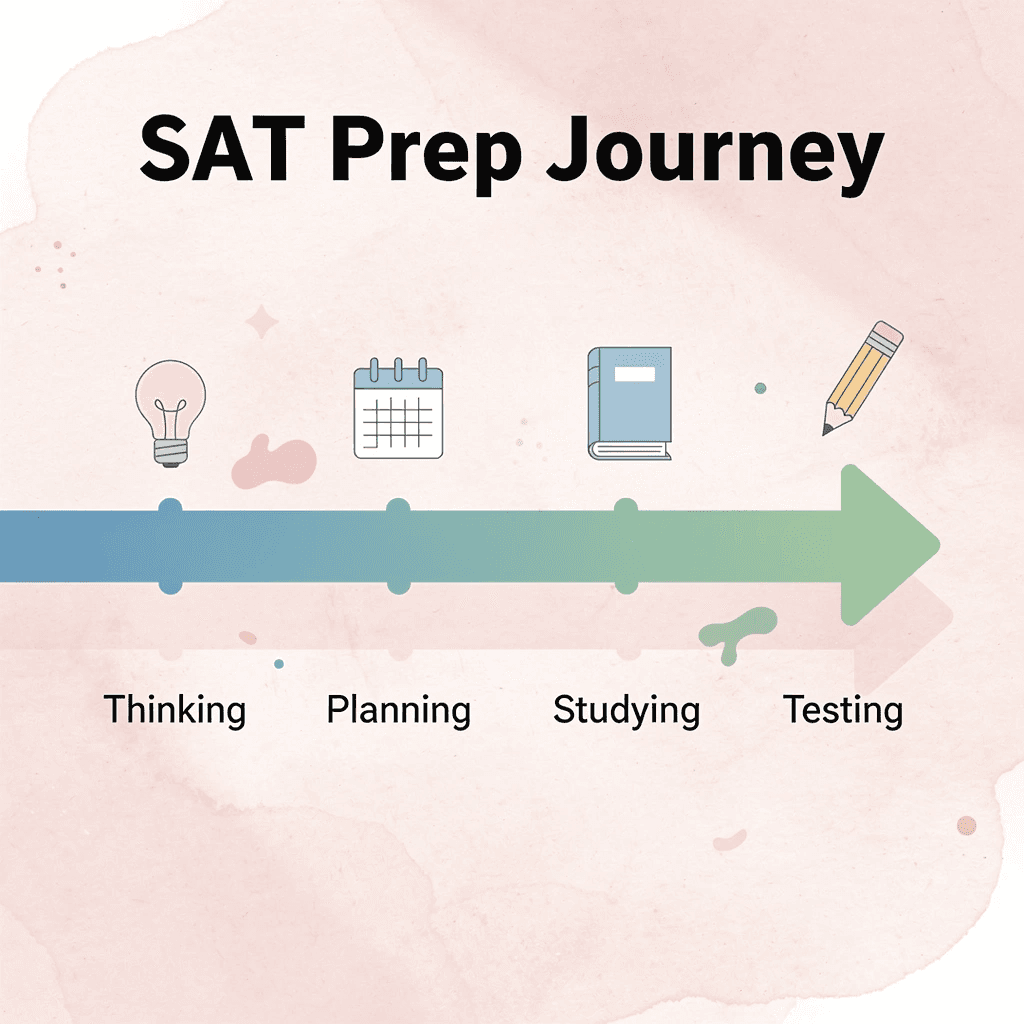
SAT prep typically begins when students plan to take the test. Most start during junior year when the first official test date becomes concrete rather than abstract.

🎯 Key Point: The transition from thinking about the SAT to actually preparing happens when students realize they need concrete test dates and target scores for college applications.
"The junior year represents the critical window when SAT preparation shifts from abstract planning to active study schedules." — College Board Planning Guidelines
⚠️ Warning: Starting prep too late in junior year can create unnecessary pressure and limit retake opportunities before senior year college application deadlines.
What are the most common times students start SAT prep?
Some students begin in their sophomore year, wanting extra time. Without a clear plan, that time stretches out and goes underused, and the material doesn't compound without a system holding it together.
Why do most students choose junior year for SAT prep?
Most students start in junior year. General Academic reports that most Houston students begin researching ACT and SAT prep during the summer and start tutoring by August of junior year. This timing works with a structured plan, but many start earlier without one, spreading energy across months with no accountability or milestones.
What happens when students wait until senior year?
Others wait until senior year, when prep becomes rushed with limited time to improve and fewer chances to retake the test.
The test date determines the prep window
Most students take the SAT in the spring of junior year or the fall of senior year, which determines when prep begins. Aligning prep with your planned test date makes studying more efficient: starting too early lacks direction, while starting too late leaves insufficient time. Platforms like Kollegio's AI college counselor help students avoid guesswork by analyzing their current standing, available study hours, and college goals to recommend a personalized timeline that balances intensity with sustainability. Understanding when most students start matters only if you know when you should.
The Ideal Time to Start SAT Prep
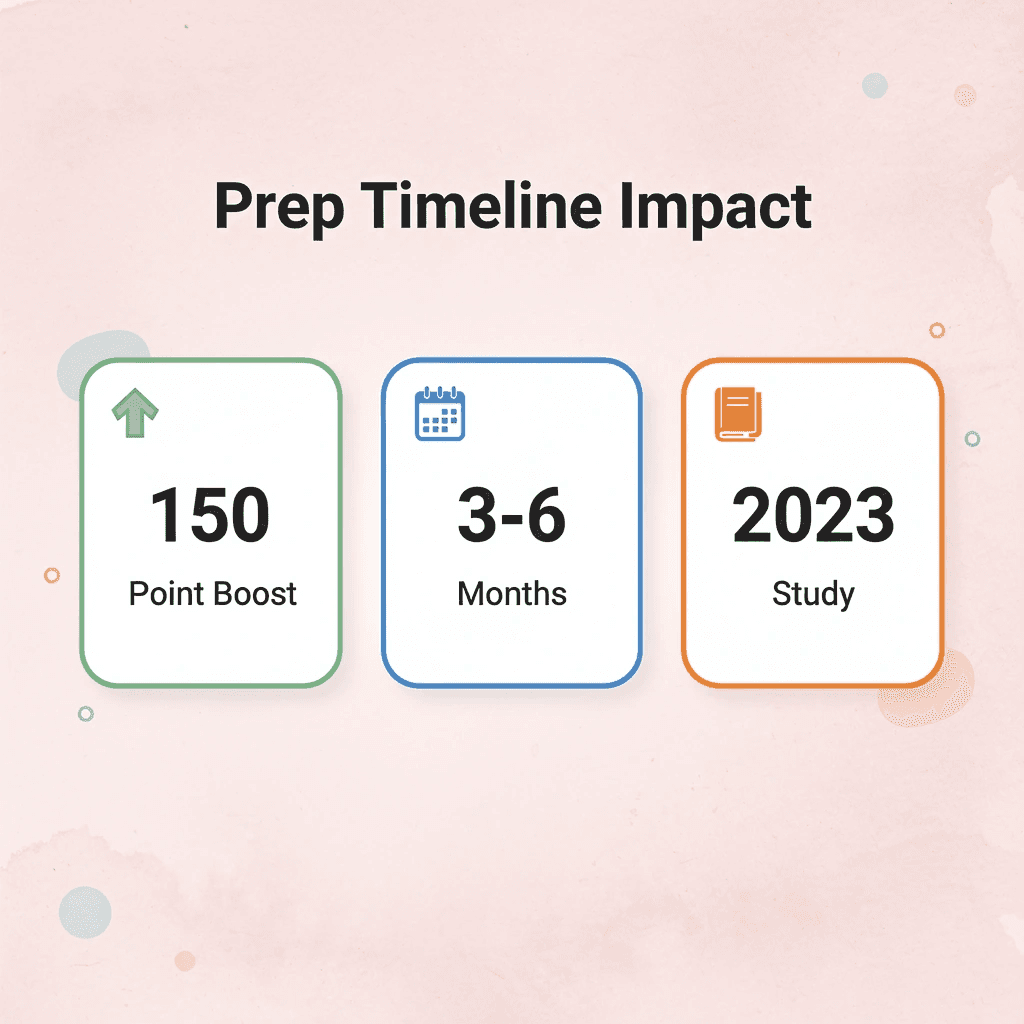
Start SAT prep three to six months before your first test. This window lets you find weak areas, build skills strategically, and allows time for a retake if needed. Starting too close to test day creates pressure, while starting too early risks losing focus.
🎯 Key Point: The three-to-six-month window provides the perfect balance between adequate preparation time and maintaining momentum throughout your study journey.

"Students who begin SAT preparation 3-6 months in advance score an average of 150 points higher than those who start just 4-6 weeks before the test." — College Board Research, 2023
Prep Timeline | Advantages | Disadvantages |
|---|---|---|
Less than 2 months | Quick turnaround, focused intensity | Rushed preparation, limited retake options |
3-6 months | Optimal balance, time for retakes, thorough skill building | Requires sustained motivation |
More than 8 months | Extensive preparation time | Risk of burnout, losing focus |
⚠️ Warning: Starting your SAT prep too late is one of the most common mistakes students make, often resulting in lower scores and missed college application deadlines.
Working backward from the test date
Most students plan for the test by grade level: sophomores wonder if they're starting too early, juniors if they're starting too late. This confusion stems from treating test prep as age-dependent rather than deadline-dependent. The shift that matters is planning backward from your test date. If you're taking the SAT in March, you start in October; if it's in May, you begin in December. The calendar becomes a tool rather than a source of anxiety. You know exactly how many weeks you have and can plan what needs to happen in each one.
What this timeline allows you to do
Three to six months allows you to accomplish three things that improve your scores. First, a diagnostic test establishes your baseline and identifies which sections need the most work. Second, you have time to improve by practicing weak areas, tracking weekly progress, and adjusting your approach when needed. You retain more because you build skills incrementally rather than attempting to learn everything at once. Third, you have room for a retake if necessary, with time to analyze what went wrong and refine your strategy.
Why do compressed or extended timelines fail?
Students who compress this into weeks lose the ability to iterate and get only one chance. Those who stretch it over a year lose urgency, study sporadically, and lose momentum. Our AI college counselor helps students avoid both traps by analyzing their current score, available study hours, and college goals to recommend a sustainable timeline, then adapting it as progress unfolds. But starting at the right time only protects you if you understand what happens when timing fails.
What Happens If You Start Too Early or Too Late
Timing alone doesn't determine results. How that time is used matters as much.

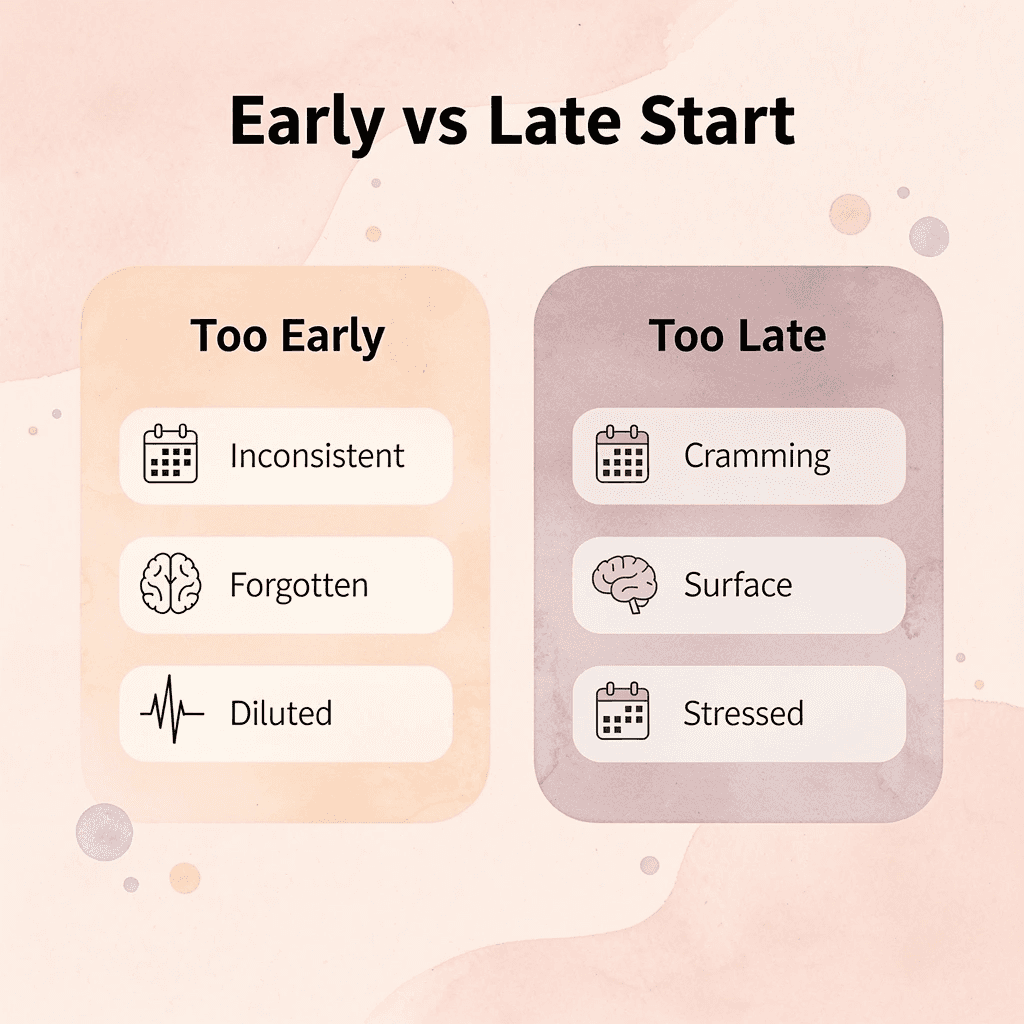
Starting too early without structure dilutes effort through inconsistent study and forgotten material. Research on the forgetting curve shows information fades without active reinforcement, while the spacing effect demonstrates that distributed learning requires structured and intentional practice, not random or unfocused effort.
🔑 Key Takeaway: The quality of your study structure matters more than simply starting early - unstructured preparation can actually hurt your performance by creating false confidence in material you haven't truly mastered.

"Information fades without active reinforcement, while distributed learning only works when structured and intentional." — PMC Research on Forgetting Curve
⚠️ Warning: Starting too late creates time pressure that forces surface-level cramming instead of deep understanding, leading to poor retention and higher stress during exams.
The early starter trap
Starting early without a plan leads to loss of retention, inconsistent effort, and burnout before the test. You open practice books sporadically, review concepts you'll forget within months, and never build momentum. According to the Centers for Disease Control and Prevention, 75% of high schools start before 8:30 a.m., compounding the challenge: students already lack sufficient sleep, making sustained focus difficult. Without a system, the material doesn't build on itself.
What happens when you start SAT prep too late?
Starting too late forces cramming, which research shows is less effective for long-term retention than spaced, repeated learning. This leads to limited score improvement, insufficient time to address weak areas, no opportunity for a retake, and heightened stress near test day.
Why does structured timing matter more than duration?
One student studies lightly for a year with no plan and forgets much of it. Another study for four months with a clear plan, consistent practice, and targeted improvement. The second student often performs better because they studied with the right structure at the right time. Platforms like Kollegio's AI college counselor assess your current score, available study hours, and college goals to suggest a timeline that balances rigorous preparation with sustainability, then adjust the roadmap as you progress. Timing without structure leads to wasted effort, whether you start early or late. Understanding how to build an effective timeline is essential.
Related Reading
- Average Sat Score
- Average ACT Score
- How To Improve SAT Score In 2 Weeks
- How Long Does A Practice SAT Take
- Sat Study Schedule
- Is the SAT adaptive
- Are SAT Prep Classes Worth It
- How Many Reading Questions Are on the SAT
- SAT Grammar Rules
- How to Prep for ACT
- What's a Good SAT Score
How to Build a Smart SAT Prep Timeline
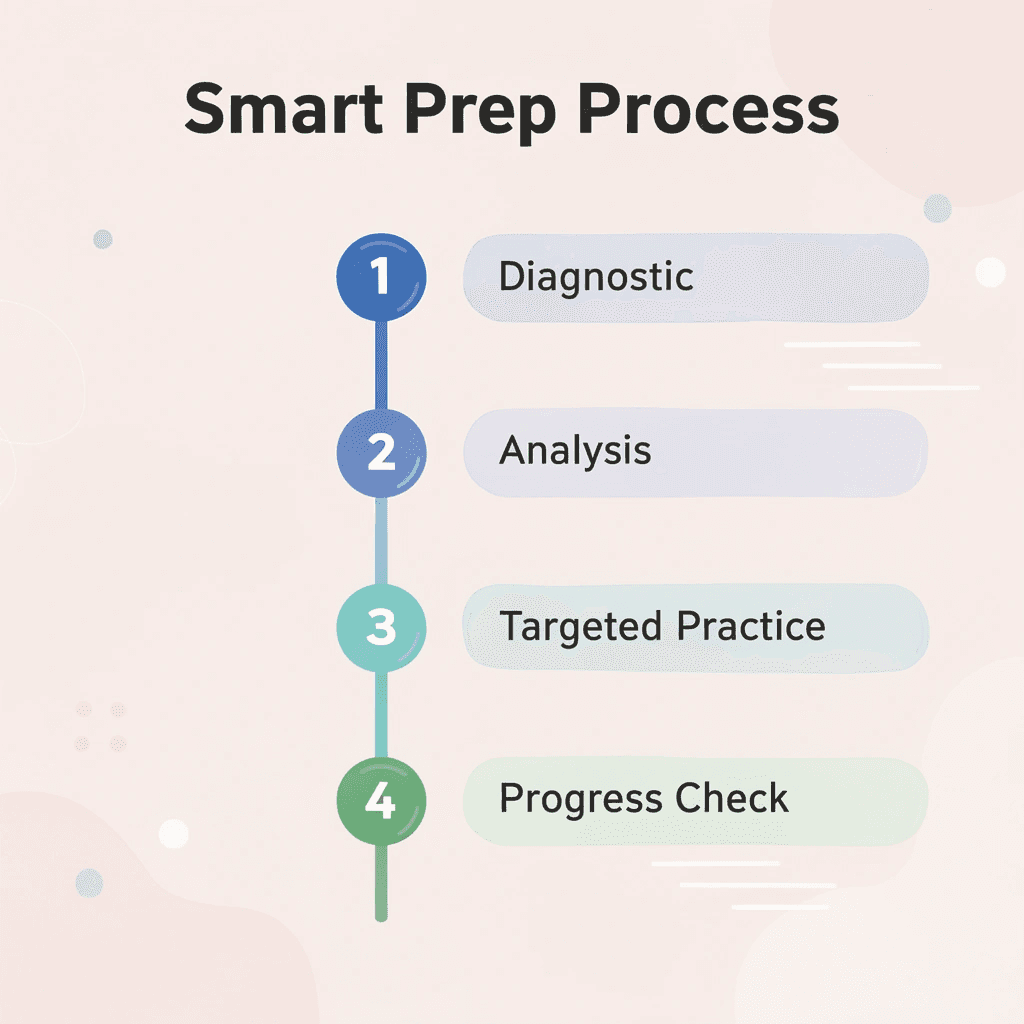
A strong SAT plan focuses on doing the right work at the right time: knowing where you stand, focusing on what matters most, and building a timeline that keeps you moving forward without burning out before test day.
🎯 Key Point: The most successful SAT prep strategies prioritize diagnostic assessment first, then targeted practice based on your specific weaknesses rather than generic study plans.
"Students who follow a structured timeline with regular practice sessions score an average of 150 points higher than those who cram in the final weeks." — College Board Research, 2023
⚠️ Warning: Starting your prep without a clear timeline and milestone checkpoints is one of the biggest mistakes students make—it leads to inconsistent practice and last-minute panic.
Start with a diagnostic test
Start with a full-length diagnostic exam under timed conditions. This reveals your baseline score, performance under pressure, and exactly where you're losing points—whether in specific maths concepts, reading comprehension, or grammar rules. Without this step, most students waste time reviewing everything instead of focusing on what will most improve their score.
Identify weak areas early
Break down your diagnostic results and look for patterns in your mistakes. Are you consistently missing certain question types? Are timing issues causing careless errors? This transforms your prep from general practice into targeted improvement, focusing effort on areas that will yield the biggest score increase.
Create a structured plan
Build your preparation into a structured timeline with weekly goals, regular practice tests, and time for review. PrepScholar outlines four example SAT study schedules based on different starting scores and target goals. Consistency is key: a good plan keeps your effort focused and sustainable, whether you have three months or six months.
Schedule your test date in advance
Pick your test date early and plan backward from it. This creates a clear deadline that controls your study pace, sets milestones, and keeps you consistent. Without a fixed date, preparation becomes irregular and less effective.
Leave room for a retake
Build your timeline assuming you may take the SAT more than once. Many students perform better on a second attempt because they understand the format, improve their timing, and refine their strategy. Planning a retake relieves pressure from your first test and gives you a second opportunity to reach your target score. But even the best timeline falls apart without the right system holding it together.
Related Reading
- What's A Good Act Score
- When Should I Start Studying For The Act
- Act Grammar Rules
- Do Colleges Prefer Act Or Sat
- What's A Good Sat Score
- Best Sat Prep Apps
- Best Sat Prep Books
- Best Sat Practice Tests
- Best Act Prep Books
- Best Act Prep Apps
How Kollegio Helps You Start SAT Prep at the Right Time
Most students start SAT prep either too early, without a clear plan, or too late when stressed, because they don't know what score they need or how to plan their timeline. Kollegio connects your SAT prep directly to your goals.
🎯 Key Point: Timing your SAT prep correctly can be the difference between achieving your target score and falling short of your college admissions goals.
"Poor timing is one of the most common mistakes in SAT preparation - students either burn out from starting too early or panic from starting too late." — College Prep Research, 2024
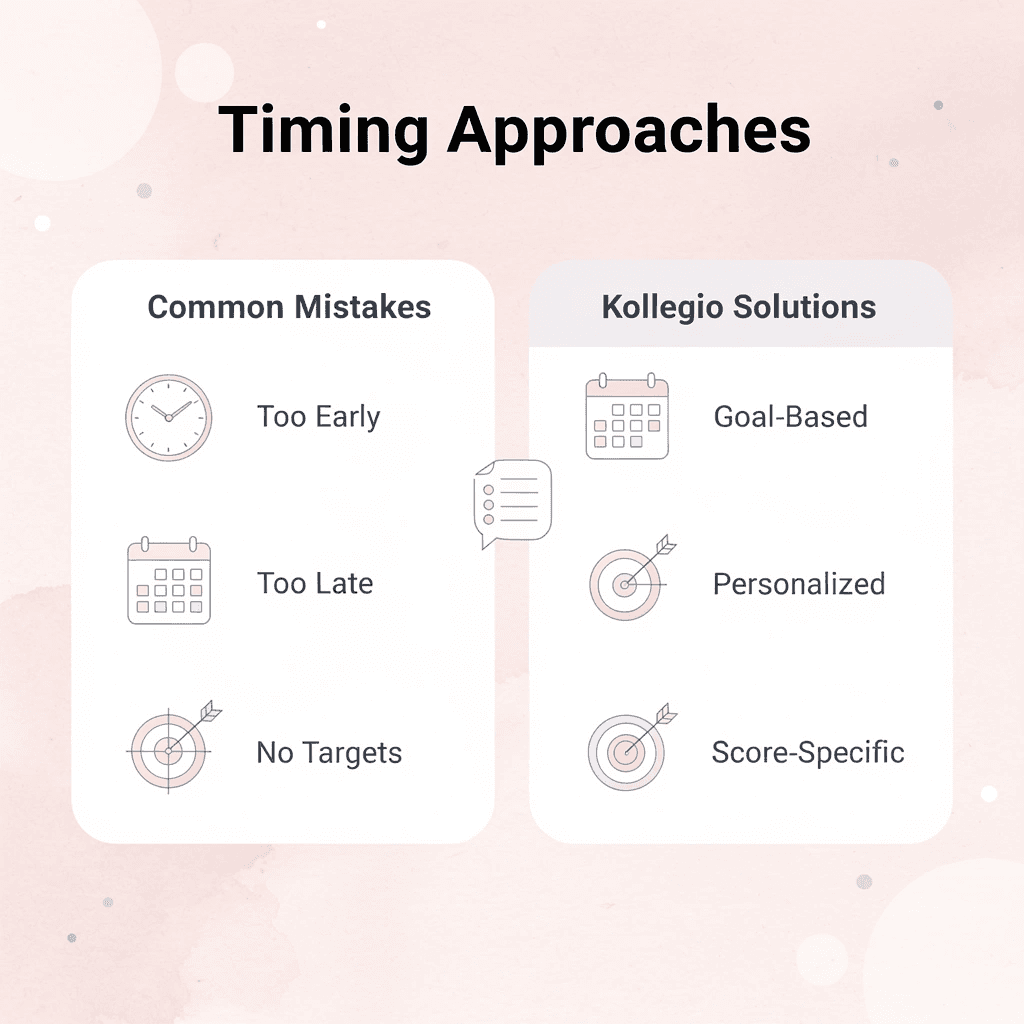
Common Timing Mistakes | Kollegio's Solution |
|---|---|
Starting too early without direction | Goal-based timeline planning |
Beginning too late under pressure | Personalized prep schedules |
Not knowing target scores | College-specific score targets |
⚠️ Warning: Without a strategic approach to timing, even the most dedicated students can waste valuable study time or miss application deadlines.
Starting with the outcome, not the test
Instead of starting with the test, you start with the outcome. You can see what SAT score you need for your target schools, giving your prep a clear purpose. You are no longer studying to improve generally; you are working toward a score range that matters for your applications. You can build a college list based on your current profile, showing where you stand and where improvement would make the biggest difference. This removes guesswork from when to begin and clarifies what your timeline should accomplish.
How do you know if a retake is worth the effort?
Kollegio helps you determine whether improving your score will change your choices. Instead of automatically planning multiple attempts, you can see which schools become available at different score levels. According to the College Board's Official SAT Practice research, 20 hours of study correlates with a score gain of 115 points. This information becomes valuable when you know exactly what those 115 points unlock in terms of college choices or scholarship eligibility.
What additional benefits can score improvements unlock?
Kollegio shows scholarships matching your score range, clarifying what each point increase could unlock. You start with your target score, timeline, and strategy clearly defined.
How does alignment make prep more efficient?
A student might assume they need to start studying a year in advance. After using Kollegio's AI college counselor, they discover their target schools require a score achievable in four months. Our AI college counselor helps students focus their prep within that realistic window, maintain consistency, and avoid unnecessary burnout. Research from the College Board shows that 6 to 8 hours of focused, deliberate study correlates with a 90-point increase in score. The result is more efficient prep: every step ties to a clear goal. You know why you're studying, what you're working toward, and when you need to be ready. That alignment transforms scattered effort into measurable progress.
What tools make timing matter
But knowing when to start matters only if you have the right tools to make it happen.
Use Kollegio's AI College Counselor for Free Today!
Kollegio maps your SAT score goals, college list, and prep timeline in one place. In your first session, you'll see exactly when to start, what score you need, and whether a retake will improve your options.

💡 Tip: Your personalized roadmap is built from your current standing, the schools you're targeting, and the time you have available for preparation.
"Clarity turns scattered effort into focused progress—the difference between hoping for results and actually achieving them."

This targeted approach means you stop guessing and start working toward a specific goal. That strategic focus transforms random prep work into measurable improvement: completely free to use today.
🎯 Key Point: Kollegio's AI eliminates the guesswork by creating a data-driven plan that aligns your current abilities with your target schools and available timeline.